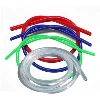

Automotive silicone hoses are crucial components in the automotive industry, primarily used for fluid transport and sealing. Common materials include:
Silicone: The main component of silicone hoses, possessing excellent high-temperature resistance, low-temperature resistance, and chemical corrosion resistance, making it suitable for high-temperature environments such as automotive engines and cooling systems. The elasticity and flexibility of silicone also allow it to adapt to varying pressure changes.
Polyurethane: Polyurethane hoses offer good abrasion resistance and tear resistance, suitable for applications requiring high pressure and impact resistance. For example, polyurethane silicone hoses are commonly used in diesel engine fuel systems.
Ethylene-vinyl acetate copolymer (EVA): EVA material offers good flexibility and low-temperature resistance, suitable for automotive components in cold climates.
Fluororubber (FKM): Fluororubber exhibits excellent high-temperature resistance and chemical corrosion resistance, suitable for critical components in automotive fuel systems, braking systems, and other critical components, especially in environments involving contact with oils and chemical media.
Polyvinyl chloride (PVC): PVC silicone tubing is typically used in lower pressure and temperature environments as an economical and practical choice, primarily for automotive air delivery and some non-critical systems.