



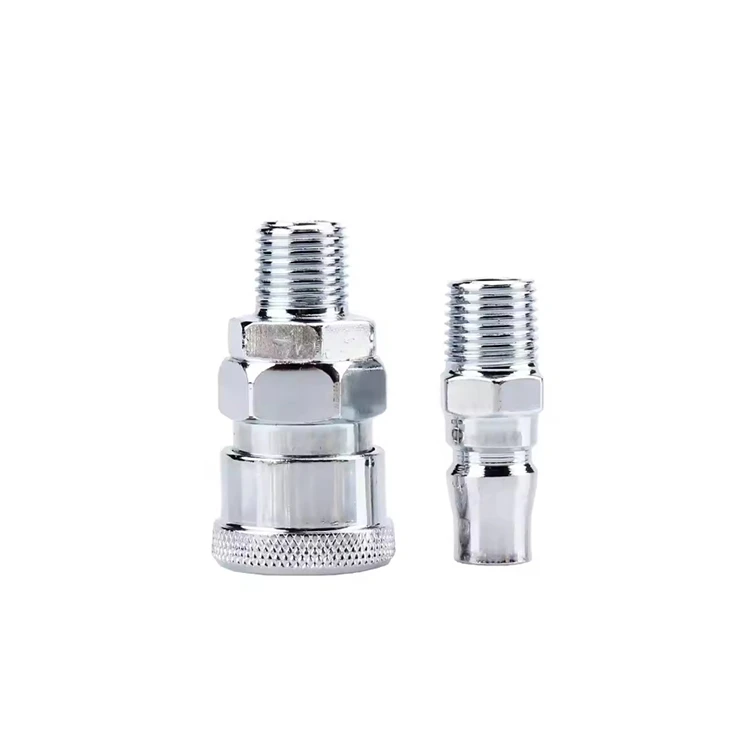

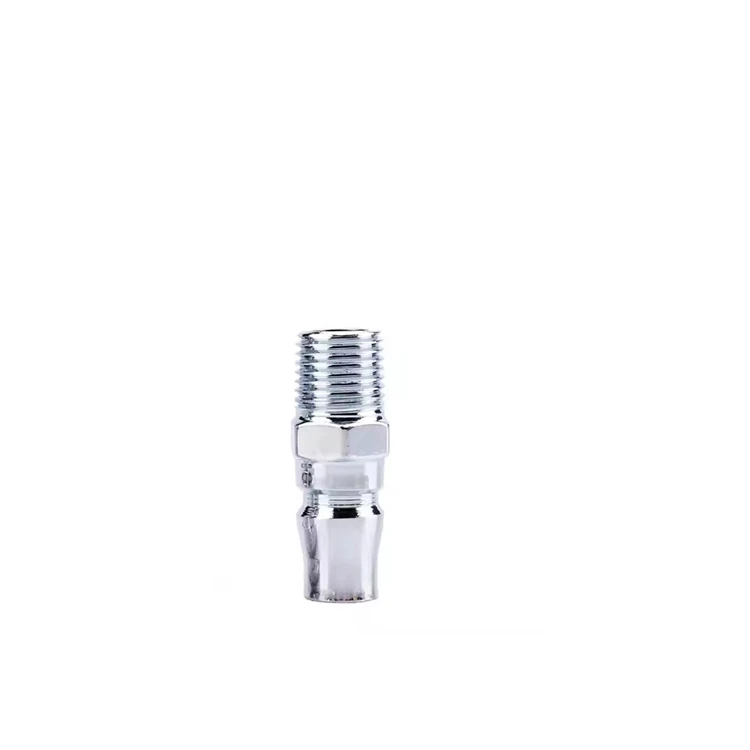
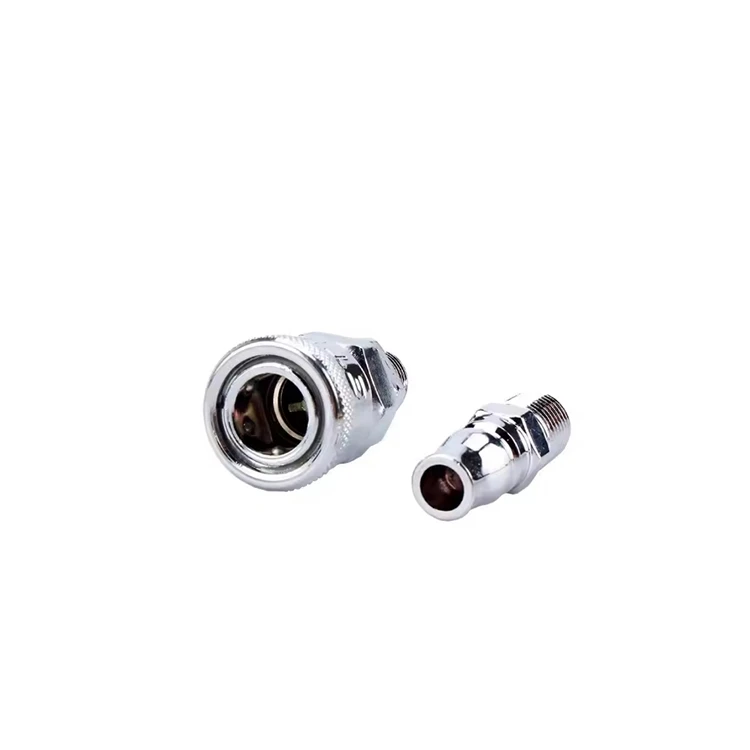
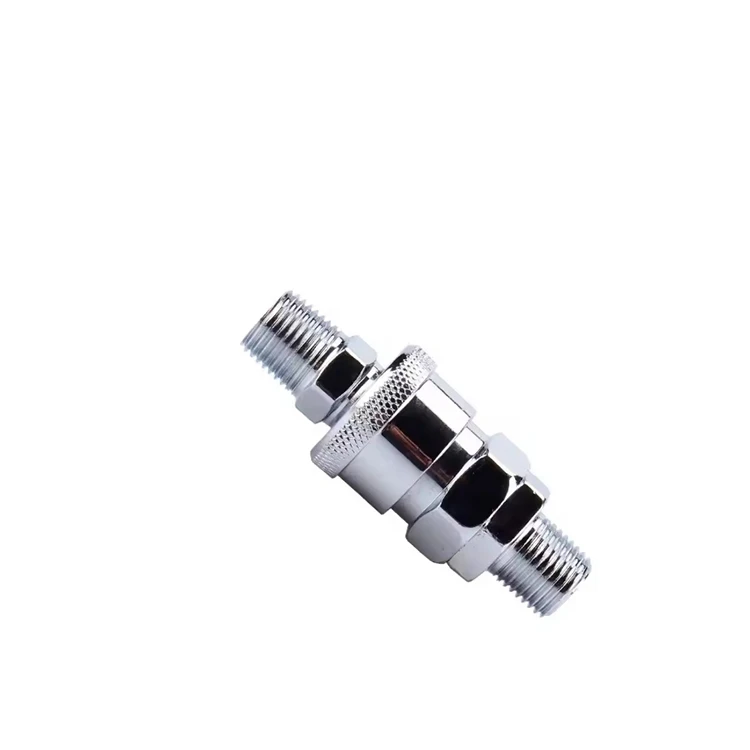
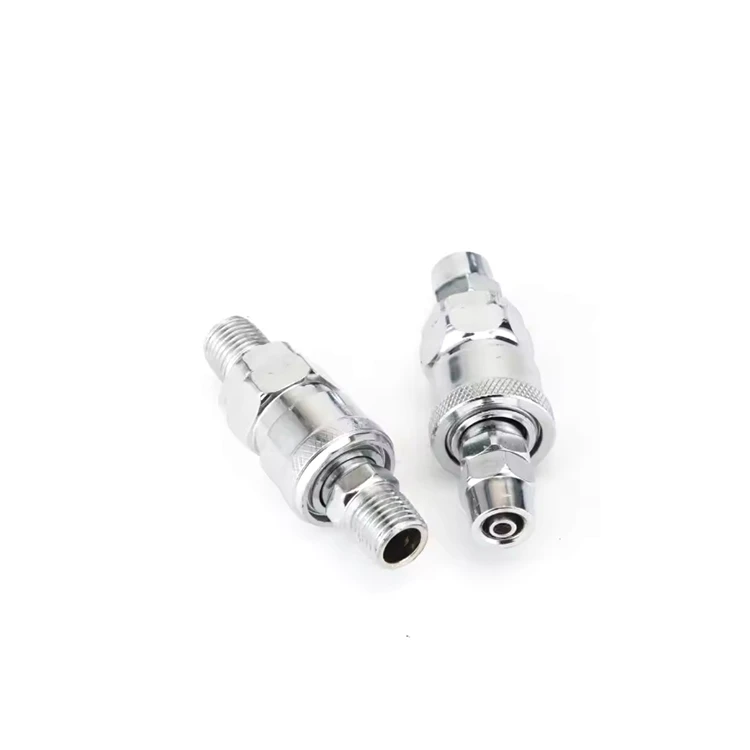
Quick Release Couplings
Size: 1/4" to 2"
Material: Stainless Steel SS316 / Carbon Steel A105 / Brass
Working Pressure: Up to 950 Bars
Connection Thread Type: Threaded BSPP / Threaded NPT
High pressure quick release couplings – general information
Quick release couplings solve the problem of quick connection and disconnection of flexible hose assemblies. The connection can be made faster and easier than in the case of standard screwed couplings (threaded, flanged) because it is made by hand, with no tools. Usually, it requires only pushing a plug into a socket. Locking occurs automatically, using the spring mechanism. The most often the plug is blocked in the socket with steel balls. In many cases connection and disconnection can be made with one hand only ("one hand operation").
The use of quick release couplings facilities assembly. It enables fast and easy replacement of interchangeable modules of hydraulic systems, saving time and money.
1 – body
2 – blocking mechanism (sleeve, spring, steel balls)
3 – seal (O-ring, stopper ring)
4 – valve (valve head, spring, valve holder)
5 – – valve seal (O-ring)
6 – body
7 – valve (valve head, spring, valve holder)
8 – valve seal (O-ring)

|
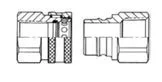
straight-through |
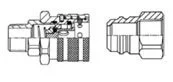
single shut-off |
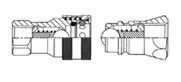
double shut-off |
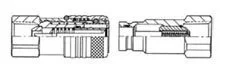
double shut-off, |
|
|
|
|
|
|
no valves |
valve only on supply side |
valves on both socket |
valves on both socket and plug side, |
|
|
|
|
|





Other features of hydraulic quick release couplings
The application of a socket or a plug with a pressure eliminator facilities connection of quick release couplings when residual pressure in the system is high. The eliminator, a tiny release valve with two small holes, is built into the socket or plug. Once the quick release coupling is connected, release valve opens, the medium flows out through the holes causing the drop of the static pressure.
|
socket and plug without eliminator |
valve without eliminator |
|
|
|
|
socket and plug with eliminator |
valve with eliminator |
|
|
|


ISO-F quick release couplings can be fitted with a pressure eliminator at the plug side only. In ISO-F plug with the pressure eliminator, there is an additional space inside the body, into which pressurised oil enters when connecting to the socket. As a result, static pressure drops (in the hose assembly on the plug side) and the quick coupling can be easily connected.
|
socket without eliminator |
plug without eliminator |
|
|
|
|
plug with eliminator |
|
|
|


|
To connect standard quick release coupling, locking sleeve must be pulled back and the plug must be pushed into the socket. In order to increase the ease of handling, some of the quick release couplings are connected (disconnected) with one hand. The connection takes place automatically after only pushing the plug into the socket. In order to disconnect such a coupling, the locking sleeve must be pulled back and the plug will pop out. |
|
|
|
|


How do you use quick connect fittings?
Protective dust plug and cap are an important and crucial part to maintain the usage lie of quick release couplings. It would be used to cover the connecting surfaces when the nipple and coupler are disconnected. There are many benefits when it comes to applying dust plug and cap in system.
- Helps to keep contaminants out of fluid system.
- Protection from environmental dirt and grit which prolongs the coupling life and helps to keep maintain the fitting in excellent working condition.
- Colour coded plug and cap help to visually identify connecting lines.
- Tether straps keep the plug and cap nearby when coupling halves are connected.
Hot Tags: quick release couplings, China quick release couplings manufacturers, suppliers, factory
Previous
No InformationNext
No InformationYou Might Also Like
Send Inquiry