


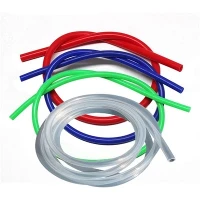
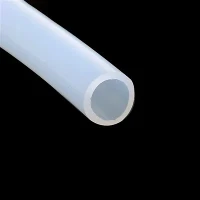


Fuel Line Hose
Inner tube: CPE/NBR synthetic rubber
Reinforcement: Stainless steel braided layer
Cover: Nylon braided / none
Temperature: -40°C +150°C
Application: Designed for Fuel Systems Engines, widely used as transmis-sion oil cooler line, fuel return line, fuel supply line, coolant fluid hose, fuelgauges line, vacuum line, turbo cooler line, oil feed line etc
|
Material/Type |
Feature/Size |
AN4 |
AN6 |
AN8 |
AN10 |
|
|
Inner diameter |
0.22 inch |
0.34 inch |
0.43 inch |
0.56 inch |
|
Outside diameter |
0.44 inch |
0.55 inch |
0.64 inch |
0.79 inch |
|
|
Working Temperature |
-40 ~ +350 °F |
-40 ~ +350 °F |
-40 ~ +350 °F |
-40 ~ +350 °F |
|
|
Working Pressure |
1000 PSI |
1000 PSI |
1000 PSI |
1000 PSI |
|
|
Burst pressure |
5000 PSI |
5000 PSI |
5000 PSI |
5000 PSI |
|
|
|
Inner diameter |
0.22 inch |
0.34 inch |
0.43 inch |
0.56 inch |
|
Outside diameter |
0.44 inch |
0.55 inch |
0.64 inch |
0.79 inch |
|
|
Working Temperature |
-40 ~ +350 °F |
-40 ~ +350 °F |
-40 ~ +350 °F |
-40 ~ +350 °F |
|
|
Working Pressure |
500 PSI |
500 PSI |
500 PSI |
500 PSI |
|
|
Burst pressure |
2000 PSI |
2000 PSI |
2000 PSI |
2000 PSI |
|
|
Standard Lengths: 3.3ft/1m, 4ft/1.2m, 4.5ft/1.4m, 5.2ft/1.6m, 9.8ft/3m, 16.4ft/5m |
|||||


There are several differences between metal, rubber, braided, and PTFE-lined fuel lines:
Material: Metal fuel lines are made from materials such as steel or aluminum, while rubber fuel lines are made from rubber or other elastomeric materials. Braided fuel lines are typically made from a metal or synthetic fiber braid that is wrapped around a rubber or other elastomeric core. PTFE-lined fuel lines have an inner layer of PTFE (polytetrafluoroethylene), a synthetic fluoropolymer, which is coated with a layer of braided stainless steel or other metal.
Durability: Metal fuel lines are generally more durable than rubber or braided fuel lines, as they are resistant to wear and tear and are not prone to cracking or deterioration. Rubber fuel lines can become hard and brittle over time, while braided fuel lines can be prone to leaks if the braid becomes damaged. PTFE-lined fuel lines are generally very durable and are resistant to wear, heat, and chemical damage.
Flexibility: Rubber fuel lines are generally more flexible than metal or braided fuel lines, which can make them easier to install in tight or hard-to-reach spaces. Braided fuel lines are typically more flexible than metal lines, but are not as flexible as rubber lines. PTFE-lined fuel lines are generally very flexible, but the outer braid may not be as flexible as rubber or braided lines.
Compatibility: Metal fuel lines are generally compatible with all types of fuel, while rubber fuel lines may not be suitable for use with certain fuels or chemicals. Braided fuel lines are typically compatible with a wide range of fuels, but may not be suitable for use with certain chemicals. PTFE-lined fuel lines are generally compatible with a wide range of fuels and chemicals, but may not be suitable for use with certain fuels or solvents.
Cost: Metal fuel lines are generally more expensive than rubber or braided fuel lines, while rubber fuel lines are typically less expensive than braided fuel lines. PTFE-lined fuel lines are typically more expensive than other types of fuel lines.
Hot Tags: fuel line hose, China fuel line hose manufacturers, suppliers, factory, automotive fuel hose
Previous
No InformationNext
No InformationYou Might Also Like
Send Inquiry