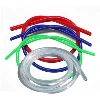
The core material of silicone tubing is silicone rubber, a high-molecular polymer composed of elements such as silicon, oxygen, carbon, and hydrogen. Unlike ordinary rubber, its main chain has a silicon-oxygen bond structure, which gives it unique properties. When the ambient temperature fluctuates drastically, such as from sub-zero temperatures in winter to hundreds of degrees Celsius during engine operation, the activity of the molecular chain segments inside the silicone tubing changes significantly. At low temperatures, the molecular chain movement slows down, and the material temporarily hardens, but it does not become brittle and crack like some rubbers; at high temperatures, the molecular chain movement intensifies, and the material remains soft and has good elastic recovery. This stability over a wide temperature range is the basis for its selection as a material for automotive piping.
Based on these characteristics, silicone tubing plays the role of a "flexible bridge" in the engine compartment. It connects rigid metal or plastic pipes, absorbs vibrations and displacements during engine operation, and withstands the pressure and chemical environment inside the cooling system. Its failure is often not a sudden break, but a gradual physical process of performance change. Long-term thermal aging can cause irreversible breakage or cross-linking of silicone molecular chains, manifesting as microcracks, hardening, or excessive softening on the material surface. Continuous thermal cycling stress accelerates the propagation of these microcracks.
From a performance gradual perspective, the primary task in maintaining silicone tubing is regular visual and tactile inspection. Without specialized tools, with the engine cool, focus on checking the outer surface of the tubing for loss of luster, cracks, bulges, or localized swelling. Squeeze the tubing by hand to feel its elasticity for uniformity, and check for any abnormally stiff or spongy areas. Inspect the clamps for deep indentations or signs of leakage. These checks should be performed in conjunction with the vehicle's maintenance schedule, especially during seasonal changes and periods of significant temperature fluctuation.