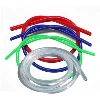
Automotive rubber hoses are indispensable connecting components in various fluid systems of automobiles, primarily responsible for transporting liquids or gases such as coolant, fuel, air, and brake fluid. They typically connect critical components like the engine, radiator, fuel system, and braking system, serving roles of transmission, sealing, and buffering.
During vehicle operation, the engine generates continuous vibration, while temperature and pressure constantly change. Compared to metal pipes, rubber hoses offer better flexibility and shock resistance, effectively absorbing vibrations, reducing pipe stress, and preventing ruptures or leaks caused by rigid connections. Furthermore, rubber hoses can adapt to complex installation spaces, allowing for a more compact and efficient vehicle structure.