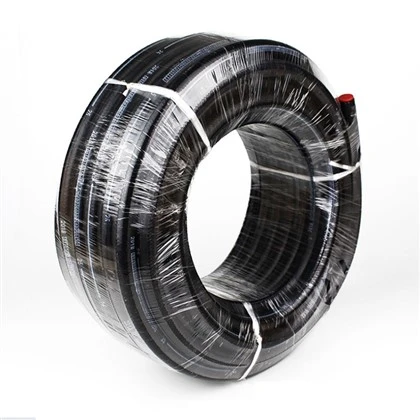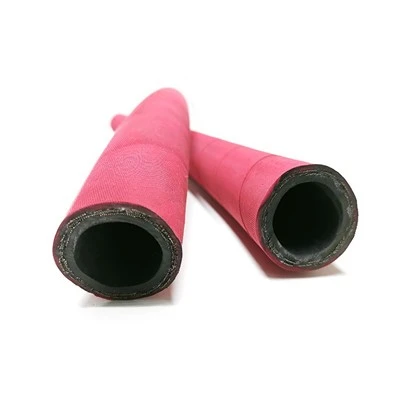
Hey there! As a supplier of rubber oil hoses, I often get asked about the hardness of these hoses. It's a crucial factor that can significantly impact the performance and durability of the hoses. So, let's dive right in and explore what the hardness of a rubber oil hose really means.
Understanding Rubber Hardness
First off, rubber hardness is typically measured using the Shore durometer scale. This scale ranges from 0 to 100, with lower numbers indicating softer rubber and higher numbers representing harder rubber. For rubber oil hoses, the hardness can vary depending on the specific application and requirements.
Softer rubber hoses, with a Shore hardness in the range of 30 - 50, are more flexible and can bend easily. This makes them ideal for applications where the hose needs to be routed around tight corners or where it's subject to frequent movement. They also have better shock absorption properties, which can help protect the hose from damage due to vibrations.
On the other hand, harder rubber hoses, with a Shore hardness of 60 - 90, are more rigid and have better resistance to abrasion, cutting, and tearing. They can handle higher pressures and are suitable for applications where the hose is exposed to rough conditions or where it needs to maintain its shape under heavy loads.
Factors Affecting Rubber Oil Hose Hardness
Several factors can influence the hardness of a rubber oil hose. One of the main factors is the type of rubber used. Different types of rubber, such as natural rubber, synthetic rubber (like neoprene, nitrile, or EPDM), have different inherent hardness characteristics.
For example, natural rubber is generally softer and more flexible, while nitrile rubber is known for its excellent oil resistance and can be formulated to have a higher hardness. The choice of rubber depends on the specific requirements of the application, such as the type of oil the hose will be handling, the temperature range, and the pressure.
Another factor is the additives and fillers used in the rubber compound. These can be used to modify the hardness, as well as other properties like strength, flexibility, and chemical resistance. For instance, adding carbon black to the rubber can increase its hardness and abrasion resistance, while plasticizers can make the rubber softer and more flexible.
The manufacturing process also plays a role in determining the hardness of the hose. The curing process, in particular, can affect the cross - linking of the rubber molecules, which in turn influences the hardness. Proper curing is essential to ensure that the hose has the desired hardness and performance characteristics.
Importance of the Right Hardness
Getting the right hardness for a rubber oil hose is crucial for its performance and longevity. If the hose is too soft, it may not be able to withstand the pressure and may bulge or burst. It can also be more prone to damage from abrasion and punctures.
On the other hand, if the hose is too hard, it may be difficult to install and may not be able to bend around corners without kinking. This can restrict the flow of oil and reduce the efficiency of the system. Additionally, a hard hose may be more brittle and prone to cracking over time, especially in cold temperatures.
For example, in a fuel delivery system, a hose with the right hardness is essential to ensure a reliable and leak - free connection. A soft hose may not be able to maintain a tight seal under pressure, while a hard hose may crack or break during installation or due to vibrations.
Applications and Hardness Requirements
Let's take a look at some common applications of rubber oil hoses and the typical hardness requirements.
Automotive Applications
In automotive engines, rubber oil hoses are used to transport engine oil, transmission fluid, and fuel. For engine oil hoses, a medium - hardness rubber (Shore 50 - 70) is often used. This provides a good balance between flexibility and resistance to oil and heat.
Fuel hoses, on the other hand, need to be more resistant to the chemicals in gasoline and diesel. A harder rubber, with a Shore hardness of 60 - 80, is typically used for Fuel Oil Hose. This helps prevent swelling and degradation of the hose due to contact with the fuel.
Industrial Applications
In industrial settings, rubber oil hoses are used in a variety of applications, such as hydraulic systems, lubrication systems, and oil transfer. Hydraulic hoses need to be able to withstand high pressures, so a harder rubber (Shore 70 - 90) is often used.
Lubrication hoses, which are used to deliver oil to machinery, may require a softer rubber (Shore 40 - 60) for better flexibility and ease of installation.
Marine Applications
In marine environments, rubber oil hoses are exposed to saltwater, UV radiation, and harsh weather conditions. A hose with a high resistance to these elements is required. A medium - to - hard rubber (Shore 50 - 80) is commonly used, as it provides good durability and resistance to abrasion and chemical attack.
Testing and Quality Control
As a rubber oil hose supplier, we take quality control very seriously. We use various testing methods to ensure that our hoses meet the required hardness specifications.
One of the most common tests is the Shore durometer test. This involves using a durometer instrument to measure the indentation of the rubber under a specific load. The reading on the durometer gives us an indication of the hardness of the rubber.
We also conduct other tests, such as pressure testing, to ensure that the hoses can withstand the required pressures without bursting or leaking. Chemical resistance tests are performed to ensure that the hoses are compatible with the oils and other chemicals they will be exposed to.


Conclusion
In conclusion, the hardness of a rubber oil hose is a critical factor that can significantly impact its performance and durability. By understanding the factors that affect hardness, the importance of getting the right hardness for different applications, and the testing and quality control measures, we can ensure that our customers get the best - performing rubber oil hoses.
If you're in the market for high - quality rubber oil hoses, we'd love to have a chat with you. Whether you need hoses for automotive, industrial, or marine applications, we have the expertise and the products to meet your needs. Don't hesitate to reach out to us for a quote or to discuss your specific requirements.
References
- "Rubber Technology Handbook" by Werner Hofmann
- "Handbook of Elastomers" by I. I. Rubin