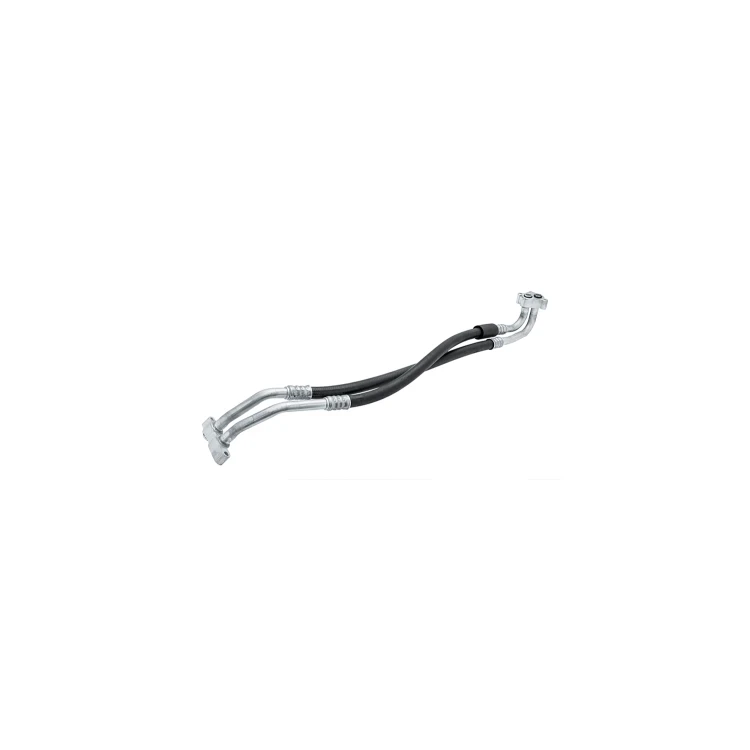
Engine Oil Cooler Hose: Why Thermal Cycling Matters in Oil Cooler Systems
An engine oil cooler hose operates under conditions that can change significantly between a cold start and normal engine operation. As the engine warms up, oil temperature rises, the hose and its connections expand, and the oil circuit moves toward its normal operating conditions. After shutdown, temperatures gradually fall again.
This repeated heating and cooling is known as thermal cycling. Over time, it can place stress on the hose material, reinforcement, connections, and surrounding components.
For automotive parts buyers, understanding thermal cycling provides a practical way to evaluate an Engine Oil Cooler Hose beyond its basic dimensions. A hose must fit the intended oil circuit while maintaining suitable performance under the actual temperature, pressure, and installation conditions.
1. Why Temperature Changes Matter to an Oil Cooler Hose
An engine oil cooler helps manage oil temperature by transferring heat away from the oil. Depending on the engine design, oil circulates between the engine and the cooler through dedicated pipes or flexible hoses.
The hose must accommodate changes in operating temperature without losing the properties required for its application. Repeated heating and cooling can affect material flexibility and contribute to aging, particularly when the hose is also exposed to vibration, pressure fluctuations, or contact with nearby engine components.
However, temperature resistance alone does not determine whether a hose is suitable. A product may tolerate a specified temperature yet still be inappropriate if its oil compatibility, pressure rating, or construction does not meet the requirements of the circuit.
When selecting an Engine Oil Cooler Hose, buyers should evaluate the complete operating environment rather than relying on a single maximum-temperature figure.
2. Material Compatibility Must Match the Actual Oil
The inner tube of an oil cooler hose is in direct contact with engine oil. Its material must be suitable for the intended oil type, operating temperature, and exposure duration.
If the material is incompatible with the oil or operating conditions, it may undergo excessive swelling, hardening, softening, or other deterioration. Such changes can affect the hose's dimensions and mechanical performance, potentially increasing the risk of leakage or premature failure.
This is particularly important when comparing different replacement hoses. Two products may have similar outer appearances but use different inner-tube materials or reinforcement structures.
Before sourcing an Engine Oil Cooler Line, confirm:
Compatibility with the specified engine oil and expected operating conditions
The required temperature range and pressure rating
Inner diameter, outer diameter, and overall length
Reinforcement and construction requirements
End connections and compatibility with the original assembly
These details help distinguish a hose designed for the intended oil circuit from a general-purpose hose that merely appears suitable.
3. Hose Routing Can Increase or Reduce Thermal Stress
Thermal cycling does not act on the hose in isolation. The way the hose is routed through the engine compartment can influence the stresses it experiences during operation.
A hose installed too tightly may have limited room to accommodate movement and dimensional changes. A poorly positioned hose may also contact hot engine components, rub against brackets, or experience repeated bending as the engine vibrates.
For this reason, routing and fitment should be considered part of the overall hose specification.
A suitable installation should provide:
Enough length for the intended connection without excessive tension
Appropriate bends without sharp kinks or forced twisting
Clearance from hot surfaces and moving components
Secure support where required by the original design
Correct alignment with the cooler and engine-side connections
These considerations are relevant to both original-equipment components and aftermarket replacements. Even a hose with appropriate material properties can experience avoidable damage if its installed position creates excessive mechanical stress.
4. Connection Points Deserve Attention During Inspection
The hose ends and their connections are important areas to inspect because they join a flexible component to rigid parts of the oil circuit.
Repeated temperature changes, vibration, incorrect installation, and unsuitable connection components can contribute to deterioration or loss of sealing performance. Signs of oil residue around a connection should therefore be investigated rather than automatically attributed to the hose body.
During inspection, check for:
Oil seepage around the hose ends or fittings
Cracks, swelling, or visible surface deterioration
Abrasion or deformation along the hose route
Damaged fittings, seals, or connection surfaces
Evidence that the hose has been stretched, twisted, or forced into position
A damaged connection should be evaluated together with the hose itself. Replacing only one component without identifying the cause may leave the original problem unresolved.
Because an oil leak can affect engine lubrication and create a safety risk, suspected leaks should be assessed promptly according to the vehicle manufacturer's service procedures.
5. Why Vehicle-Specific Fitment Is Important
An Engine Oil Cooler Hose is not necessarily interchangeable between engines, even when the vehicles belong to the same manufacturer. Differences in engine configuration, cooler location, connection design, and routing can change the required hose dimensions and assembly details.
For example, buyers searching for a BMW Engine Oil Cooler Pipe or a GM Engine Oil Cooler Hose should verify the specific vehicle, engine version, model year, and original part reference. These keywords identify application-related searches, but they do not establish that one hose fits every vehicle from that manufacturer.
For aftermarket distributors, accurate fitment information can help reduce ordering errors and unnecessary returns. For custom or OEM projects, drawings, reference samples, and measurements of the connection points can help clarify the required configuration before production.
The important principle is to match the hose to the actual oil circuit, not simply to the vehicle brand or a general product description.
6. A Practical Checklist for Purchasing Engine Oil Cooler Hoses
When evaluating an Engine Oil Cooler Hose for an automotive application, use the following sequence:
First, identify the application. Confirm the vehicle and engine details, original part number, and position of the hose in the oil circuit.
Second, confirm operating requirements. Establish the required temperature range, pressure conditions, oil compatibility, and construction requirements using reliable technical information.
Third, check dimensions and connections. Verify hose length, diameters, routing geometry, fitting type, and connection orientation.
Finally, review installation conditions. Consider nearby heat sources, vibration, clearance, and any evidence of the original hose rubbing or carrying excessive tension.
This approach helps purchasing teams assess the hose as a complete component rather than making a decision based only on size or appearance.
Thermal cycling is an unavoidable part of normal engine operation, but its effects can be managed through appropriate