Fuel Line Hose Material Compatibility: Why the Type of Fuel Matters
A fuel line hose must do more than transport fuel from one component to another. It must maintain reliable connections while resisting the chemical effects of the fuel passing through it. The correct choice depends on the fuel type, operating pressure, temperature, hose construction, and the requirements of the vehicle or equipment.
For automotive parts distributors, repair businesses, and OEM buyers, understanding fuel compatibility is an important step in selecting a Rubber Fuel Hose. Two hoses may look almost identical from the outside but use different inner materials or constructions, making them suitable for different applications.
1. Fuel Compatibility Starts With the Inner Tube
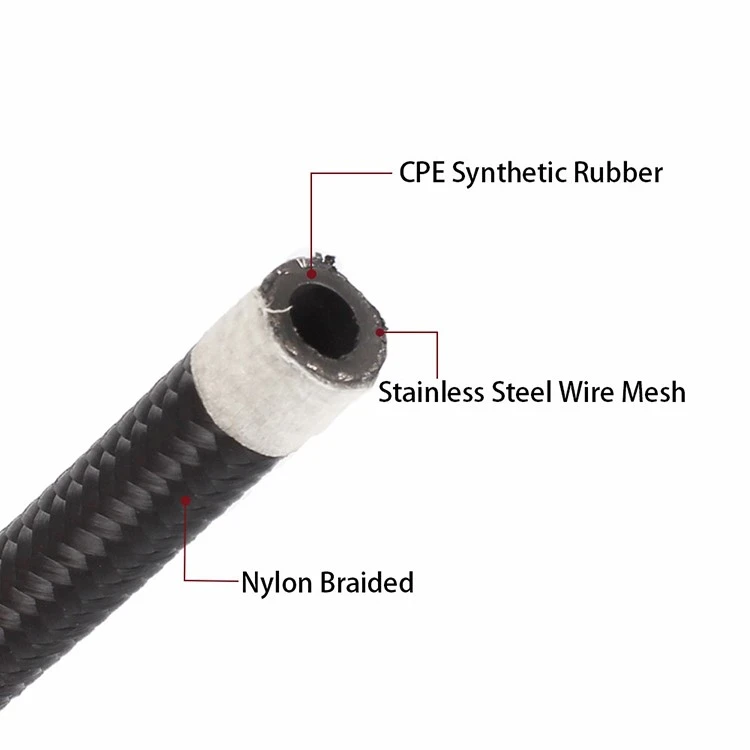
The inner tube is the part of a fuel line hose that comes into direct contact with the fuel. Its material must be compatible with the specific fuel formulation and the conditions under which the hose operates.
If the material is unsuitable, prolonged exposure may contribute to swelling, hardening, softening, cracking, or other forms of deterioration. These changes can affect sealing performance and service life.
This is why buyers should not select a fuel hose based on outer appearance alone. A black rubber surface does not reveal the chemical composition of the inner tube or confirm that the hose is suitable for a particular fuel.
When evaluating a Rubber Fuel Hose, check:
The manufacturer's stated fuel compatibility
The intended fuel type and formulation
The specified operating temperature range
The pressure requirements of the fuel system
Any applicable hose standards and vehicle requirements
These details are especially important when sourcing replacement fuel lines for different vehicle models or supplying parts to multiple markets.
2. Gasoline and Diesel Applications May Have Different Requirements
Gasoline and diesel are both automotive fuels, but a hose suitable for one application should not automatically be assumed suitable for the other.
Fuel formulations can vary by market and over time. Gasoline containing ethanol, for example, may impose different material-compatibility requirements from conventional gasoline. Diesel formulations, including blends containing biodiesel, can also have compatibility requirements that depend on the blend and the hose material.
The operating environment matters as well. A low-pressure fuel supply line and a pressurized fuel injection line may require different constructions, even if both carry fuel.
For buyers, the practical approach is to identify the actual application first rather than choosing a product based only on the general label "fuel hose."
Before confirming a Fuel Line Hose order, clarify:
Whether the application uses gasoline, diesel, or a specified fuel blend.
Whether the hose is installed on a low-pressure supply or a higher-pressure fuel circuit.
The normal operating temperature and any relevant pressure fluctuations.
The manufacturer's compatibility information for the intended fuel.
This information helps prevent the common mistake of treating all automotive fuel hoses as interchangeable.
3. Understanding SAE J30 R6, R7, and R9 Fuel Hose References
SAE J30 is a widely referenced standard for automotive fuel and oil hoses. Designations such as SAE J30 R6, R7, and R9 identify different hose categories with their own requirements. They should not be treated as interchangeable product labels.
For example, an existing vehicle may specify a particular hose type for a defined fuel-system location. Replacing it with a hose that has a different designation simply because the diameter matches can introduce compatibility or performance risks.
When sourcing SAE J30 R6/R7 hose or an SAE J30 R9 Fuel Line, buyers should confirm the applicable standard, the manufacturer's technical documentation, and the intended installation. The exact requirements should be checked against the current standard and the vehicle or equipment specification.
It is also important to distinguish between a hose designed for fuel delivery and one designed for fuel injection service. Fuel injection systems can operate at substantially different pressures depending on the system design, so a general-purpose fuel hose must not be assumed suitable for every injection application.
A product description alone is not enough to establish suitability. The pressure rating, fuel compatibility, temperature limits, and intended service should all be verified.
4. Permeation and Leakage Are Not the Same Issue
When assessing fuel hose performance, buyers should consider not only visible leakage but also fuel permeation.
Leakage occurs when fuel escapes through a damaged hose or an inadequately sealed connection. Permeation refers to fuel molecules passing through the hose material itself. Depending on the application, excessive permeation can contribute to fuel odor and emissions concerns even when there is no obvious external leak.
The level of permeation depends on factors such as the inner-tube material, hose construction, fuel composition, and operating conditions. For applications with specific emissions or permeation requirements, the selected hose must meet the relevant technical and regulatory specifications.
This is another reason not to choose a fuel line solely by outer diameter or price. A hose that physically fits the connection may still be unsuitable if its material or performance characteristics do not meet the application requirements.
Construction and Connections Must Match the Application
Material compatibility is essential, but the complete hose assembly also matters. The hose must be appropriate for the required pressure, temperature, routing, and connection method.
Reinforcement, wall construction, and end connections influence how a hose performs in service. Clamps and fittings must also be compatible with the hose design and installed according to the applicable instructions.
During installation or inspection, look for signs such as:
Cracks, surface deterioration, or unusual swelling
Hardening or softening compared with the expected material condition
Abrasion where the hose contacts nearby components
Damaged ends, loose connections, or signs of fuel leakage
Kinks or routing that places the hose under unnecessary stress
Fuel-system work should follow the vehicle manufacturer's service procedures. If a hose shows deterioration or a fuel leak is suspected, the system should be handled safely and inspected before the vehicle is returned to service.
6. What Buyers Should Confirm Before Ordering a Rubber Fuel Hose
For distributors and OEM purchasing teams, a clear specification reduces the risk of ordering a hose that fits physically but is unsuitable for its intended use.
Provide the supplier with the application, fuel type, required inner diameter, overall length, connection details, operating pressure and temperature, and any required standard or part reference. Where possible, include a drawing, reference sample, or original part number.
For replacement parts, confirm whether the hose is intended for the exact vehicle and fuel-system location. For custom projects, request technical information that addresses the specified fuel and operating conditions rather than relying on a generic statement that the hose is suitable for automotive use.
A reliable Fuel Line Hose is selected by matching its material and construction to the actual service environment. Checking fuel compatibility before ordering helps buyers make more informed sourcing decisions, supports consistent product selection, and reduces the risk of premature hose deterioration.