Industrial Grade Fiber Reinforced Silicone Tube: Cutting and Installation Considerations
An Industrial Grade Fiber Reinforced Silicone Tube is designed to provide more structural support than an unreinforced silicone tube. However, the reinforcement can only perform as intended when the tubing is cut, routed, and connected correctly.
In practical installation, some problems do not come from the material itself. They can result from how the tube is prepared before it is installed.
Make a Clean Cut
When reinforced silicone tubing needs to be cut to length, the cutting method matters.
A rough or uneven cut can make it more difficult to achieve a reliable connection. If the reinforcement is exposed unevenly at the end of the tube, it may also interfere with the fitting or clamp.
The cut should therefore be as clean and square as practical.
Avoid using a cutting method that excessively compresses, tears, or deforms the tube. The objective is to produce a clean connection end while keeping the silicone wall and reinforcement structure intact.
For production environments where many tubes are cut to the same length, using a consistent cutting method can also help improve installation consistency from one assembly to another.
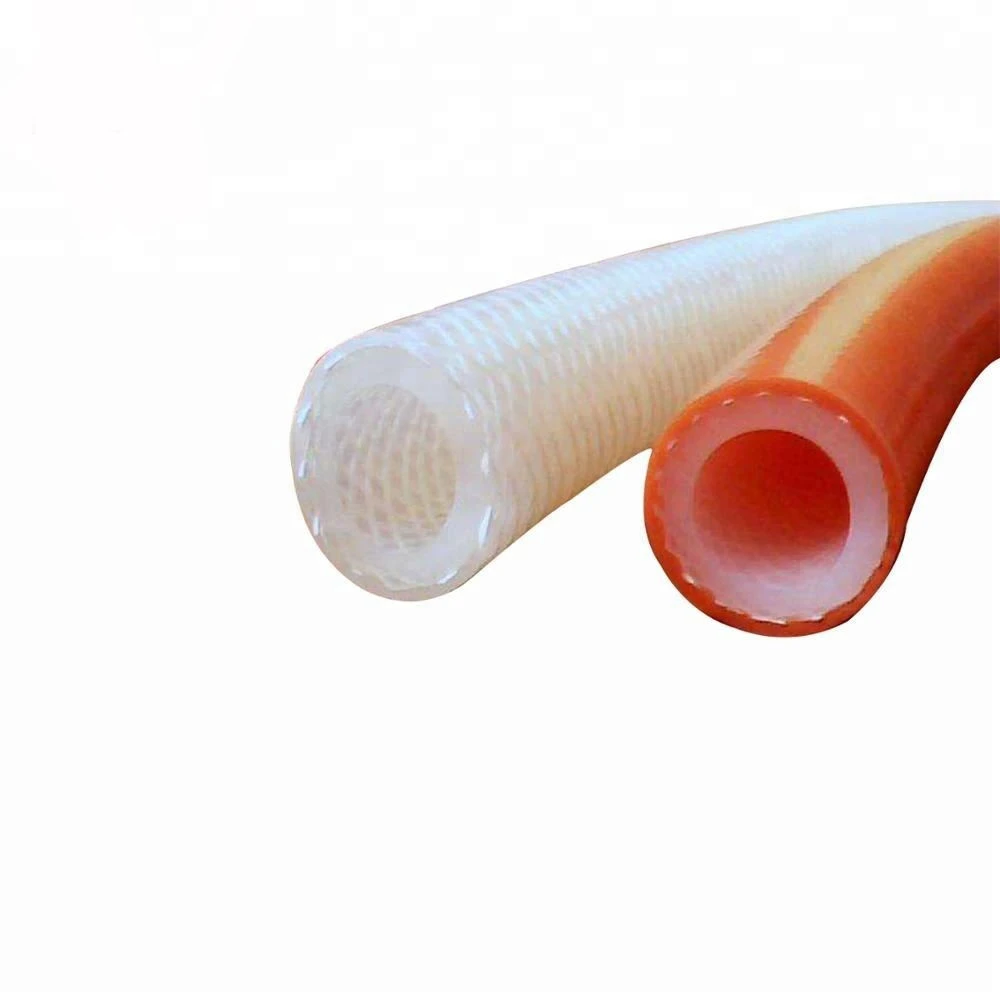
Do Not Remove the Reinforcement to Make a Connection
A common mistake is attempting to modify the end of a reinforced tube manually when it does not fit a connection.
For example, cutting away part of the outer structure or removing visible reinforcement may appear to make installation easier.
This can change the construction of the tube at the exact location where the connection needs to be secured.
If a fitting requires a specific inside diameter or outside diameter, it is better to select a tube with the appropriate dimensions rather than modify the reinforcement after production.
The connection should be designed around the actual tube construction.
Keep Bends Away From the Connection When Possible
A reinforced tube can still be flexible, but the area immediately next to a fitting should not normally be forced into an unnecessarily sharp bend.
When a tube bends sharply at the connection, the local section can experience additional mechanical stress.
A better installation arrangement allows the tube to leave the fitting naturally before changing direction.
If the available space is very limited, the hose geometry or connection configuration may need to be reconsidered rather than forcing a standard tube into an unsuitable position.
Avoid Twisting the Tube
Bending and twisting are not the same movement.
A tube may be designed to bend along its intended routing direction, but rotating it around its own axis during installation can change the orientation of the reinforcement and place additional stress on the connection.
This is particularly important when the tube has fixed connection points at both ends.
Before tightening the clamps, position the tube naturally between the two connection points. Do not rely on twisting the tube to correct an incorrect orientation.
For complex routing, a formed or custom configuration may be more appropriate than forcing a straight reinforced tube into position.
Check the Clamp Position
The clamp should secure the tube in the intended connection area without being positioned too close to the very end.
A poorly positioned clamp can create uneven compression or fail to provide adequate sealing.
At the same time, excessive tightening should be avoided. The correct clamping method depends on the tube construction, fitting design, pressure conditions, and selected clamp.
After installation, inspect the connection for visible deformation and check the system under its normal operating conditions where appropriate.
Inspect the Tube During Maintenance
Industrial tubing can be exposed to vibration, temperature changes, pressure fluctuations, chemicals, and mechanical movement.
During routine maintenance, check the areas that experience the most stress, particularly:
Connection points
Bending sections
Areas near clamps
Sections exposed to heat
Places where the tube may contact other equipment
Look for cuts, surface damage, permanent deformation, exposed reinforcement, or other changes in the tube structure.
If the reinforcement becomes visibly damaged, the tube should be evaluated rather than assuming that the silicone outer layer alone provides the same structural performance.
Good Installation Starts Before the Tube Reaches the Equipment
For an Industrial Grade Fiber Reinforced Silicone Tube, installation quality is closely related to preparation.
The correct diameter, length, cutting method, connection design, bending radius, and clamp position should be considered before assembly begins.
When the routing is difficult or the connection geometry is unusual, providing a drawing or sample to the manufacturer can help determine whether a different tube configuration would be more suitable.
Haidu provides customized Industrial Grade Fiber Reinforced Silicone Tube solutions with different diameters, wall thicknesses, reinforcement structures, lengths, and configurations according to specific industrial and OEM/ODM requirements.