Automotive Power Steering Hose: Why Pressure and Return Hoses Require Different Designs
An automotive power steering hose is an essential part of a hydraulic power steering system. It transfers power steering fluid between system components, allowing hydraulic pressure to assist the driver's steering effort.
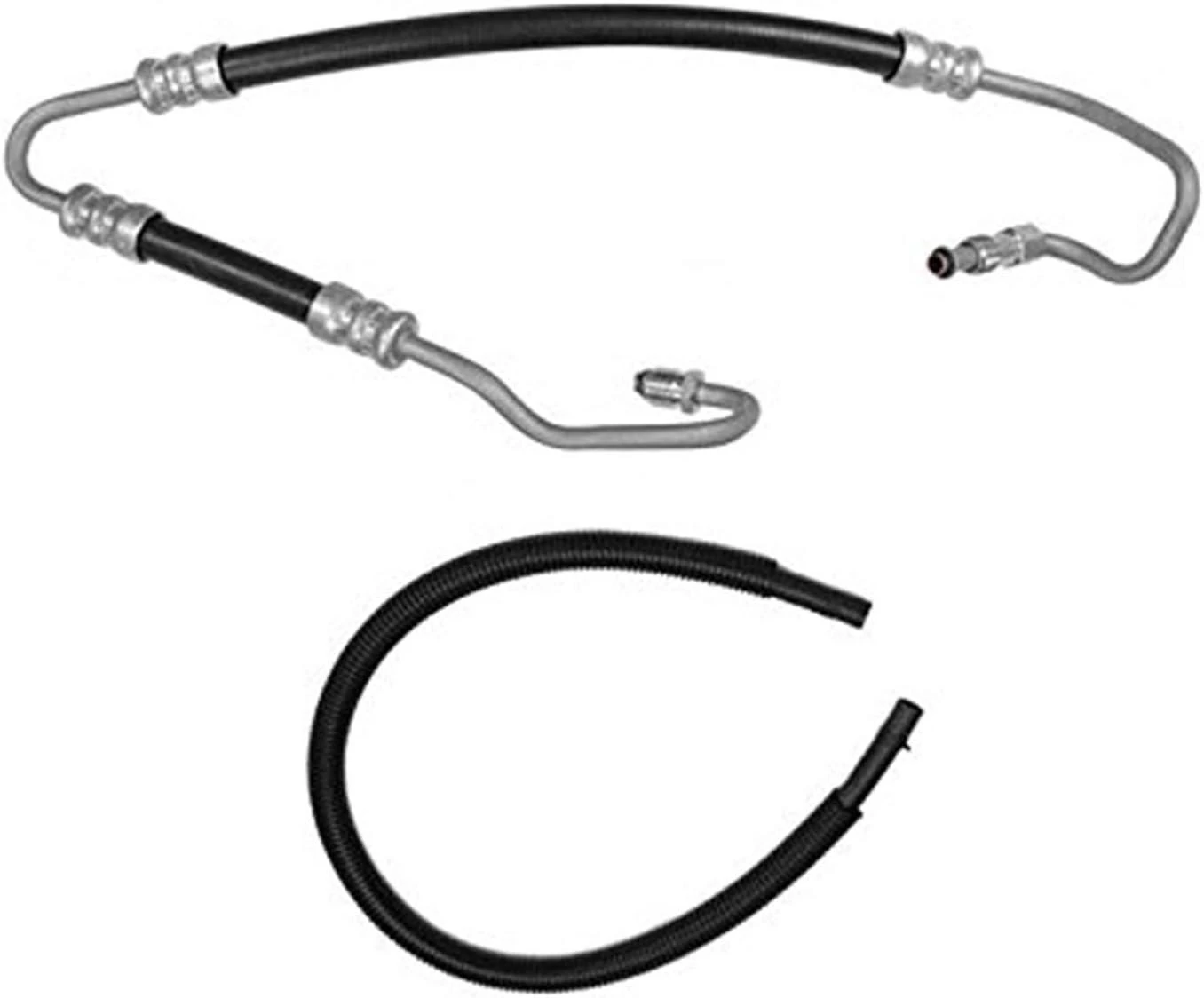
Although pressure hoses and return hoses may look similar from the outside, they perform different functions and operate under different conditions. The pressure side carries fluid delivered by the power steering pump, while the return side carries fluid back toward the reservoir. Their pressure requirements, connection designs, and hose construction therefore need to be considered separately.
This difference is particularly important when selecting an automotive power steering hose for replacement, aftermarket distribution, or OEM supply. Choosing a hose based only on its inner diameter, outer diameter, or general appearance may result in an unsuitable product.
Understanding the differences between Power Steering Pressure Hose and Power Steering Return Hose helps buyers identify the correct product for each part of the hydraulic circuit.
1. Understanding the Two Main Types of Automotive Power Steering Hose
A hydraulic power steering system uses pressurized fluid to assist steering operation. The power steering pump supplies hydraulic fluid, while the steering gear or rack uses this hydraulic assistance to reduce the effort required to turn the wheels.
The hoses form part of the fluid circuit, but not every hose carries fluid under the same conditions.
In a conventional hydraulic power steering system, two important hose categories are the pressure hose and the return hose.
Power Steering Pressure Hose
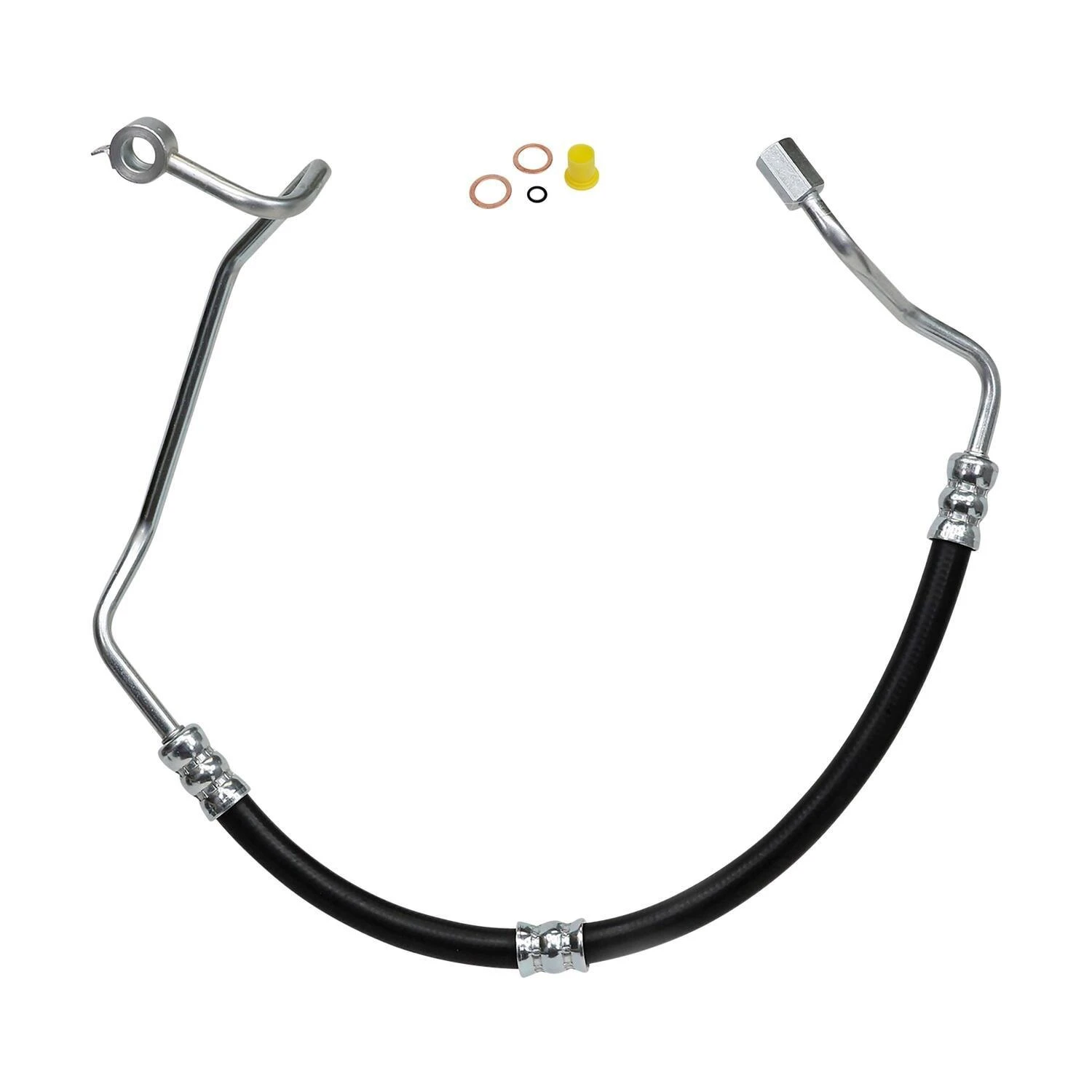
The Power Steering Pressure Hose connects the pump's pressure outlet to the steering gear or rack, depending on the system configuration.
It carries pressurized fluid generated by the pump. Its construction must therefore be suitable for the system's specified working pressure, temperature, and pressure fluctuations.
A typical power steering pressure hose assembly may include:
A fluid-compatible inner tube.
A reinforcement structure designed for the required pressure conditions.
An outer cover for environmental protection.
Permanently attached metal end fittings.
Application-specific bends, brackets, or protective components.
The hose assembly must maintain its integrity during repeated steering operation and pressure changes.
Power Steering Return Hose
The Power Steering Return Hose carries fluid from the steering gear or related hydraulic components back to the reservoir.
Unlike the pressure hose, the return hose normally operates on the lower-pressure side of the circuit. Its design requirements are therefore different.
Depending on the vehicle and system configuration, the return hose may use a different reinforcement arrangement and connection method.
Some return hose designs use suitable hose clamps and barb connections, while others use dedicated fittings or application-specific assemblies.
The important point is that a return hose is not simply a lower-cost version of a pressure hose. It is designed for a different position and operating condition within the hydraulic circuit.
2. Why Pressure and Return Hoses Cannot Be Selected Interchangeably
The most important difference between a power steering pressure hose and a return hose is their pressure duty.
A pressure hose needs to withstand the hydraulic pressure generated by the pump. It may also experience pressure fluctuations associated with pump operation and steering load changes.
A return hose carries fluid back through the return circuit, where the pressure requirements are generally lower.
This difference affects several aspects of hose design.
|
Design Consideration |
Pressure Hose |
Return Hose |
|
Circuit position |
Pump pressure outlet to steering gear or specified pressure connection |
Return path toward reservoir |
|
Pressure duty |
High-pressure application |
Lower-pressure application |
|
Reinforcement |
Designed for specified pressure and pulsation requirements |
Designed for return-side conditions |
|
Connection design |
Commonly uses application-specific crimped fittings |
May use clamps, fittings, or dedicated connections |
|
Main selection focus |
Pressure capability, fluid compatibility, temperature, assembly integrity |
Fluid compatibility, temperature, connection security, return-side pressure requirements |
The table describes typical hydraulic power steering arrangements. Actual configurations vary by vehicle manufacturer and steering system design.
What happens if the wrong hose is used?
Using a return hose in a pressure application is particularly risky.
A hose designed for lower-pressure service may not have the reinforcement, fitting retention, or overall construction needed to withstand pressure from the pump.
Possible consequences include:
Hose expansion beyond its intended limits.
Damage to the hose structure.
Leakage around the fitting connection.
Hose rupture under unsuitable pressure conditions.
Loss of hydraulic fluid and reduced steering assistance.
Using a pressure hose in a return application is not automatically an appropriate solution either. Its dimensions, flexibility, connection design, and installation characteristics may not match the return circuit.
For this reason, the correct selection should begin with identifying the hose's position and function in the hydraulic system.
3. Pressure Pulsation: An Important Consideration in Pressure Hose Design
Hydraulic power steering pumps do not always produce perfectly steady fluid pressure.
Pump operation can generate pressure pulsations. These are variations in pressure that occur repeatedly as the pump operates.
The pulsations may be transmitted through the fluid and hose assembly, potentially contributing to vibration or noise within the steering system.
A power steering pressure hose therefore needs to be evaluated not only for its ability to withstand the specified working pressure but also for its behavior under dynamic pressure conditions.
Why pulsation behavior matters
A hose is a flexible component. Its structure responds to changes in internal pressure, and this response can influence how pressure fluctuations are transmitted through the system.
The hose construction, reinforcement arrangement, wall characteristics, and assembly design all contribute to its dynamic behavior.
Some power steering pressure hose designs are specifically intended to reduce the amplitude of pump pressure pulsations.
SAE J188 is an example of a standard addressing high-volumetric-expansion-type power steering pressure hoses. Its scope describes applications where reducing the amplitude of pump pressure pulsations is required.
This is an important technical distinction: the design objective is not necessarily to make every power steering hose as rigid as possible. The required expansion characteristics depend on the intended hose type and system function.
Why pressure ratings alone are insufficient
Two hoses may have similar working pressure ratings but different construction and dynamic characteristics.
A suitable pressure hose should be assessed according to the requirements of the complete application, including:
Working pressure.
Temperature range.
Pressure pulsation behavior.
Reinforcement construction.
Fluid compatibility.
Fitting retention and assembly performance.
For OEM and replacement projects, matching the specified hose type is more reliable than selecting a product based on a single pressure figure.
4. Power Steering Fluid Compatibility and Material Selection
Power steering fluid is another important factor in hose selection.
The fluid passes through the inner tube continuously during system operation. The tube material must therefore be suitable for the fluid specified by the vehicle manufacturer.
Power steering systems may use different fluid formulations depending on the vehicle and steering system design. Some systems specify particular hydraulic fluids, while others use fluids with different chemical compositions and performance requirements.
A hose that is compatible with one fluid should not automatically be assumed suitable for every power steering application.
Why the inner tube matters
The inner tube is the part of the hose that directly contacts the power steering fluid.
If the material is unsuitable, prolonged exposure may cause changes such as:
Swelling.
Softening.
Hardening.
Loss of mechanical properties.
Deterioration of the inner surface.
These changes may affect the hose's internal dimensions and long-term integrity.
The correct material selection should consider the specified fluid, operating temperature, and expected service conditions.
Why fluid compatibility is not the only consideration
Even when the inner tube is suitable for the fluid, the complete hose assembly still needs to meet its mechanical requirements.
The reinforcement must support the intended pressure duty, while the outer cover must protect the hose in the installation environment.
The fittings and assembly process must also be compatible with the hose construction.
This is why buyers should request information about the complete product specification rather than asking only whether a hose is suitable for power steering fluid.
5. Temperature and Heat Exposure in Power Steering Hose Applications
Power steering hoses are installed in areas where temperature conditions can vary significantly.
Depending on the vehicle layout, the hose may pass near the engine, exhaust-related components, or other heat-producing equipment.
The fluid inside the hose can also become warm during operation. Repeated changes in fluid temperature and external environmental temperature place additional demands on the hose materials.
Internal temperature
The temperature of the power steering fluid depends on system operation, vehicle conditions, and the design of the hydraulic circuit.
The inner tube must maintain its properties when exposed to the specified fluid temperature range.
External temperature
The outer cover may be exposed to heat from nearby components, as well as moisture, dust, road debris, and other environmental influences.
The cover material should be appropriate for the installation environment.
Long-term material aging
Repeated thermal exposure can gradually affect rubber properties. The extent of these changes depends on the material formulation, exposure conditions, and product construction.
For this reason, temperature resistance should be evaluated as part of the complete hose specification.
Buyers should confirm both the continuous operating temperature and any permitted peak temperature rather than relying on a general description such as heat-resistant rubber hose.
Why the Connection Design Differs Between Pressure and Return Hoses
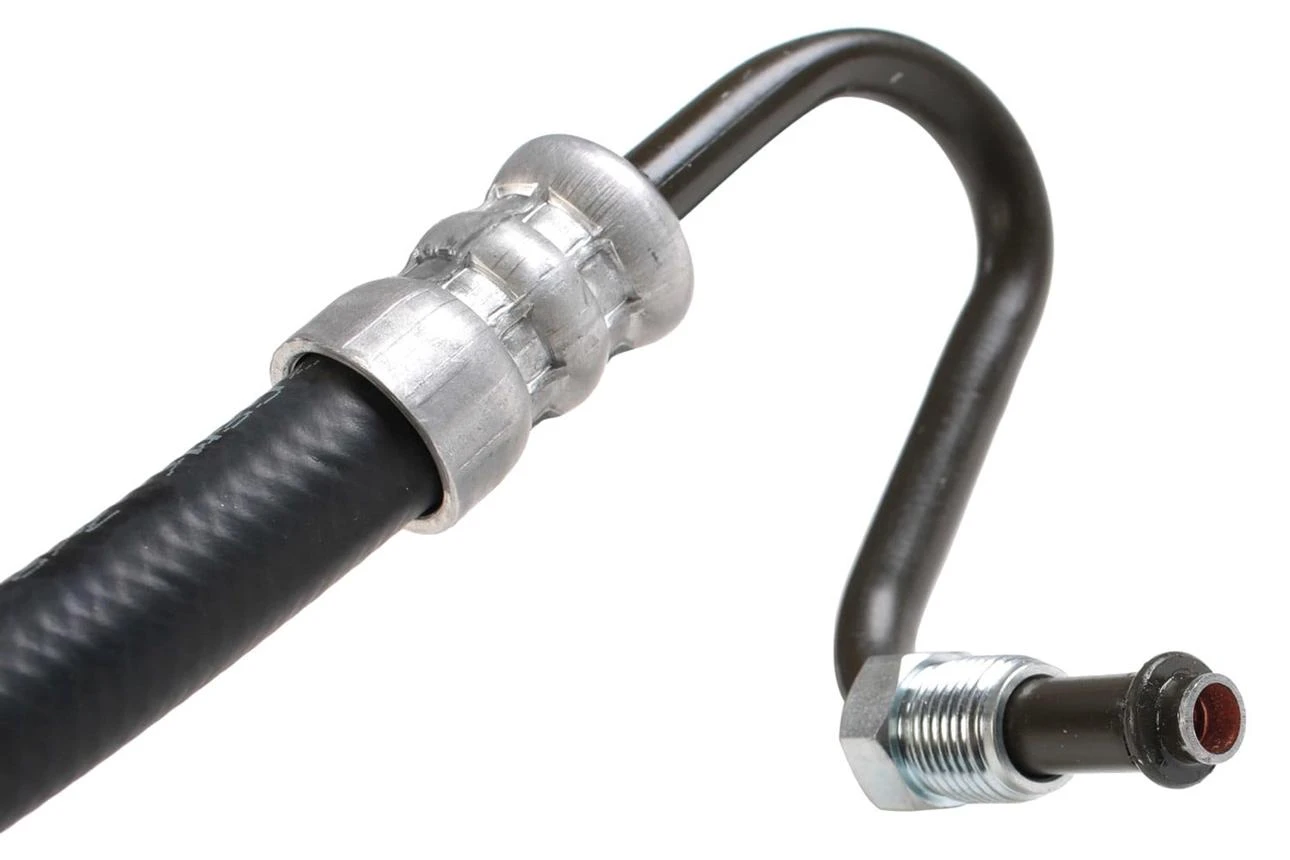
The connection arrangement is another reason why power steering pressure hoses and return hoses should be treated as different products.
The pressure hose commonly uses permanently attached metal fittings. These fittings connect the hose to the pump and steering gear or other specified components.
The connection must maintain a secure seal under the required hydraulic pressure and operating conditions.
Return hose connections may use different arrangements depending on the vehicle design. Some systems use hose clamps and suitable connection tubes, while others use dedicated fittings.
Pressure hose assembly
The pressure hose fitting needs to match the original connection geometry, thread or sealing arrangement, and mounting position.
The hose-to-fitting assembly must also provide adequate retention and sealing performance.
Return hose connection
Return hose connections are often designed around the return circuit's lower pressure requirements.
The hose inner diameter, outside diameter, fitting geometry, and clamp arrangement all need to match the intended connection.
Why dimensions alone are not enough
A hose may have the correct nominal inner diameter but still be unsuitable if:
The fitting type is different.
The connection angle does not match.
The hose length is incorrect.
The outside diameter is incompatible with the specified clamp.
The assembly cannot follow the original installation route.
For replacement applications, photographs of both ends, original part numbers, and dimensional drawings can help clarify the required configuration.
7. What Buyers Should Check When Sourcing Automotive Power Steering Hose
For importers, distributors, and OEM purchasers, distinguishing between pressure and return hose requirements is an important first step.
Before placing an order, buyers should confirm the following information:
|
Specification |
Why It Matters |
|
Hose type |
Identifies whether the product is a pressure hose or return hose |
|
Vehicle application |
Confirms the intended vehicle and steering system |
|
Inner diameter |
Matches the required fluid passage and connection dimensions |
|
Outer diameter |
Helps confirm fitting, clamp, and installation compatibility |
|
Working pressure |
Establishes the required pressure capability |
|
Pressure pulsation requirements |
Relevant to specified pressure hose designs |
|
Temperature range |
Confirms suitability for internal and external operating conditions |
|
Fluid compatibility |
Ensures the inner tube is suitable for the specified power steering fluid |
|
Reinforcement construction |
Helps establish suitability for the intended pressure duty |
|
End fitting type |
Confirms compatibility with the pump, steering gear, or return connection |
|
Hose length and shape |
Supports correct installation and routing |
|
Applicable standards |
Establishes relevant product and performance requirements |
For OEM or customized projects, providing the original sample, technical drawing, vehicle model, and connection details can help reduce specification errors.
It is also useful to identify whether the product is supplied as a complete hose assembly or as bulk hose intended for a specified assembly process. These are different supply requirements and should be clearly stated during purchasing.
8. Understanding SAE Standards for Power Steering Hoses
SAE International publishes separate standards addressing different automotive power steering hose applications.
Two relevant examples are:
SAE J188 – Power Steering Pressure Hose: High Volumetric Expansion Type
This standard covers specified pressure hose constructions used in automotive power steering applications. Its scope includes hoses intended for applications where reducing the amplitude of pump pressure pulsations is required.
SAE J189 – Power Steering Return Hose: Low Pressure
This standard addresses power steering return hose applications. Its scope describes low-pressure flexible connections used in automotive power steering systems.
The two standards have different application scopes and should not be treated as interchangeable specifications.
They also contain defined construction, dimensional, and testing requirements. A general statement that a product is a power steering hose does not establish compliance with either standard.
Buyers should verify the exact product type, applicable standard edition, testing documentation, and target-market requirements before making a compliance claim.
9. Choosing the Correct Automotive Power Steering Hose
Selecting an automotive power steering hose starts with understanding its function in the hydraulic circuit.
A pressure hose and a return hose may belong to the same steering system, but they operate under different conditions and require different design considerations.
The pressure hose needs to meet its specified pressure and dynamic performance requirements. The return hose must be suitable for the return circuit's pressure, fluid, temperature, and connection conditions.
Both types also require appropriate material compatibility, correct dimensions, and reliable connections.
For automotive parts buyers, the most effective sourcing approach is to identify the hose position first, then confirm the vehicle application, fluid specification, pressure requirements, dimensions, and fitting arrangement.
Treating Power Steering Pressure Hose and Power Steering Return Hose as separate product categories helps reduce selection errors and makes it easier to match the hose assembly to the intended hydraulic power steering system.