R404A Auto Air Condition Hose: How Hose Routing and Flexibility Affect Long-Term Performance
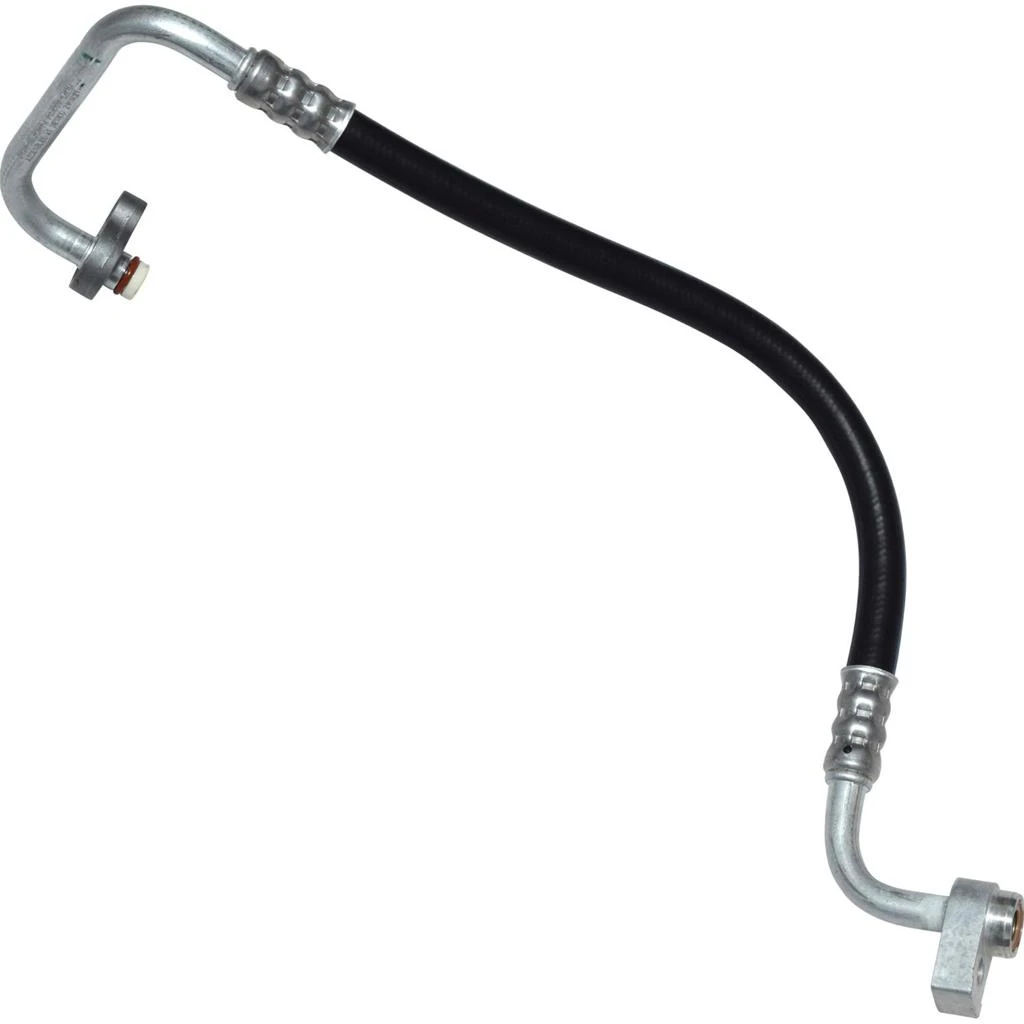
An R404A auto air condition hose is a product keyword used to describe a refrigerant hose associated with R404A applications. When evaluating an air conditioning hose, however, the refrigerant specification is only one part of the selection process. The hose must also be suitable for its installation environment, operating conditions, and connection requirements.
One important factor is hose routing.
In an operating vehicle or mechanical system, a refrigerant hose is not always exposed to static conditions. Vibration, equipment movement, temperature changes, and repeated mechanical loading can affect the hose and its connections over time. A hose that appears correctly installed when the equipment is stationary may experience additional stress once the system starts operating.
For automotive air conditioning hose applications, routing and flexibility therefore deserve careful attention. The hose needs to follow a suitable path, accommodate the movement expected in its installation environment, and avoid unnecessary contact with surrounding components.
This article focuses on how hose routing, bending, and mechanical movement influence refrigerant hose selection and installation.
1. Why Hose Routing Matters in Air Conditioning Systems
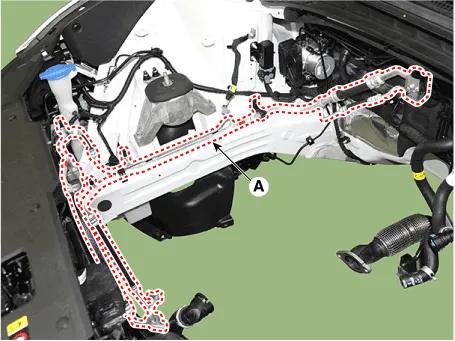
An air conditioning hose connects different components within a refrigerant circuit. Depending on the system design, these connections may involve the compressor, condenser, evaporator, and other refrigerant-carrying components.
The distance between these components, their relative positions, and the available installation space determine the hose routing.
A suitable hose route should provide a continuous connection without forcing the hose into an excessively tight bend or an unnatural position. It should also allow enough space for the hose to operate without being continuously pulled, compressed, or twisted.
Poor routing can create several problems:
Excessive bending near the hose ends.
Continuous tension caused by insufficient hose length.
Twisting during installation.
Contact with sharp edges or nearby components.
Repeated rubbing against brackets, pipes, or vehicle structures.
Additional mechanical stress caused by vibration and movement.
These issues may not be immediately visible during initial installation. However, repeated exposure can increase stress on the hose body and connection areas.
For buyers sourcing automotive air conditioning hoses, this means that product selection should consider the actual installation path rather than relying only on nominal diameter and overall length.
2. Understanding Bending Radius in Refrigerant Hose Applications
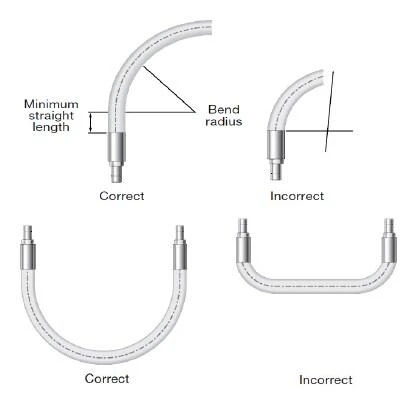
Bending radius is one of the most important dimensional considerations in hose installation.
It describes the radius of the curve formed when a hose bends. Each hose construction has a minimum recommended bending radius, which defines how tightly it can be bent under specified conditions.
When a hose is bent beyond its recommended limit, its internal structure may become distorted. Depending on the construction and severity of the bend, this can lead to:
Local deformation of the hose cross-section.
Restricted internal flow passage.
Increased stress on the hose wall.
Uneven loading around the bend.
Additional stress near the end fittings.
A tight bend can also affect the hose's ability to maintain its intended shape during operation.
The correct bending radius depends on the hose's diameter, material, reinforcement, and construction. A larger hose does not necessarily have the same bending characteristics as a smaller hose, and two hoses with similar outside dimensions may have different flexibility.
For this reason, minimum bending radius should be confirmed from the manufacturer's technical data rather than estimated from appearance.
Bending near the connection points
The areas close to the fittings deserve particular attention.
When a hose is connected to a compressor, condenser, or another component, the first section of hose after the fitting should not be forced into an immediate sharp turn. A tight bend close to the connection can concentrate mechanical stress in a relatively small area.
A more suitable routing arrangement provides a gradual transition from the fitting into the main hose path.
This helps avoid unnecessary loading at the connection and makes the overall assembly easier to install.
3. How Vibration and Movement Affect Air Conditioning Hoses
Vibration is a normal consideration in many mechanical systems. In vehicles, the engine and other operating components generate movement that can be transmitted through brackets, mounting points, and connected pipes.
An air conditioning hose may therefore experience repeated movement even when its connection points remain fixed.
The amount and direction of movement depend on the system layout. For example, a hose connected between components with different mounting arrangements may experience relative movement during operation.
A suitable hose installation should accommodate the expected movement without creating excessive tension or bending.
Three factors are particularly important.
Relative movement between connected components
If two connected components move differently, the hose between them needs enough flexibility to accommodate that movement.
A hose that is too short may be pulled whenever the connected components move. A hose that is excessively long may create unnecessary loops or contact with surrounding parts.
The objective is not simply to provide the maximum possible length. It is to select a length that supports the intended routing and movement requirements.
Repeated bending and mechanical fatigue
Repeated movement can cause a hose to bend and straighten during operation. Over time, this repeated mechanical loading may contribute to fatigue, particularly when movement is concentrated at one point.
A well-planned hose route distributes movement more appropriately and avoids unnecessary bending at the same location.
Contact with nearby components
Vibration may cause a hose to move against a bracket, metal pipe, engine component, or other nearby surface.
If this contact continues during operation, abrasion may gradually affect the outer cover.
Adequate clearance, appropriate support, and suitable protective measures can help reduce this risk.
4. Why Hose Length Should Be Selected According to the Installation Path
When selecting an air conditioning hose, buyers sometimes focus on the distance between two connection points. However, the actual hose length required is not always equal to the straight-line distance.
A hose normally follows a curved route to accommodate component positions, avoid obstacles, and maintain an appropriate bending radius.
If the hose is too short, installation may require pulling or stretching it into position. This can create continuous tension at the connections.
If the hose is too long, excess material may form loops or contact other components. This can make routing difficult and increase the possibility of rubbing or unwanted movement.
A practical hose length should account for:
The distance between the connection points.
The planned routing path.
The required bending radius.
The position of nearby components.
The movement expected during operation.
The space available for supporting and securing the hose.
For OEM and replacement applications, measuring the original hose is useful, but the original routing should also be reviewed. A replacement should reproduce the required connection geometry and installation path, not simply match the original hose's overall length.
Where possible, technical drawings, physical samples, and installation photographs provide more useful information than a single length measurement.
5. The Relationship Between Hose Flexibility and Structural Support
Flexibility is important because an air conditioning hose needs to follow its installation path and accommodate movement.
However, flexibility alone does not determine whether a hose is suitable.
The hose also needs to maintain its structural integrity under its specified pressure, temperature, and environmental conditions. Its construction must be designed to meet the requirements of the intended refrigerant application.
A hose that is too rigid for the available installation space may be difficult to route and may place additional stress on the connections.
On the other hand, a hose that lacks sufficient structural support may be more vulnerable to deformation under certain operating conditions.
The balance between flexibility and structural support depends on several design factors:
Hose diameter
The inside and outside diameters influence the available flow passage, wall construction, and overall flexibility.
Material selection
The material needs to be compatible with the specified refrigerant and lubricant and suitable for the expected temperature range.
Reinforcement construction
The reinforcement contributes to the hose's mechanical properties and pressure resistance. Its design must be evaluated as part of the complete hose construction.
Wall thickness and overall construction
These affect the hose's dimensional stability and mechanical behavior. They should be selected according to the intended application rather than adjusted independently.
For manufacturers and buyers, the important consideration is that a refrigerant hose should be evaluated as a complete construction. Flexibility, pressure capability, refrigerant compatibility, and durability need to be considered together.
6. External Heat and Environmental Conditions Along the Hose Route
The installation location can also affect the selection of an air conditioning hose.
In a vehicle or mechanical equipment compartment, a refrigerant hose may pass near hot components, metal surfaces, electrical wiring, and other pipes.
Even if the hose is designed for the required internal operating conditions, its outer surface may be exposed to additional environmental influences.
These can include:
Heat from nearby components.
Contact with engine or equipment structures.
Moisture and road contaminants.
Dust and dirt accumulation.
Abrasion caused by repeated contact.
Exposure to cleaning agents or other chemicals.
The outer cover should be suitable for the expected external environment. Where the routing passes close to a heat source or abrasive surface, the installation may require additional clearance, shielding, or protective measures.
It is important to distinguish between the refrigerant temperature inside the hose and the external temperature surrounding the hose. Both can influence product selection, but they are not the same operating condition.
For buyers, confirming the installation environment helps avoid selecting a hose based only on its internal pressure rating.
7. What Buyers Should Check Before Ordering an Air Conditioning Hose
For automotive parts distributors, OEM purchasers, and equipment suppliers, a clear technical specification helps ensure that the hose matches the intended application.
When sourcing an R404A Auto Air Condition Hose or another refrigerant hose, consider the following information:
|
Specification |
Why It Matters |
|
Intended application |
Confirms whether the hose is for automotive, commercial refrigeration, or another system |
|
Refrigerant type |
Establishes the required refrigerant compatibility |
|
Lubricant compatibility |
Helps confirm suitability for the specified system lubricant |
|
Inside diameter |
Determines the required flow passage and connection dimensions |
|
Outside diameter |
Helps check installation clearance and fitting compatibility |
|
Working pressure |
Must match the specified operating conditions |
|
Temperature range |
Confirms suitability for internal and external temperatures |
|
Minimum bending radius |
Helps determine whether the hose can follow the planned route |
|
Hose length |
Supports correct installation without excessive tension or slack |
|
Reinforcement construction |
Provides information about the hose's structural design |
|
Connection details |
Confirms compatibility with the fittings and connected components |
|
Applicable standards |
Establishes the requirements relevant to the actual application |
For customized products, it is useful to provide drawings, original samples, connection details, and photographs of the installation position.
This information helps the manufacturer understand not only the hose dimensions but also the mechanical conditions the hose will experience after installation.
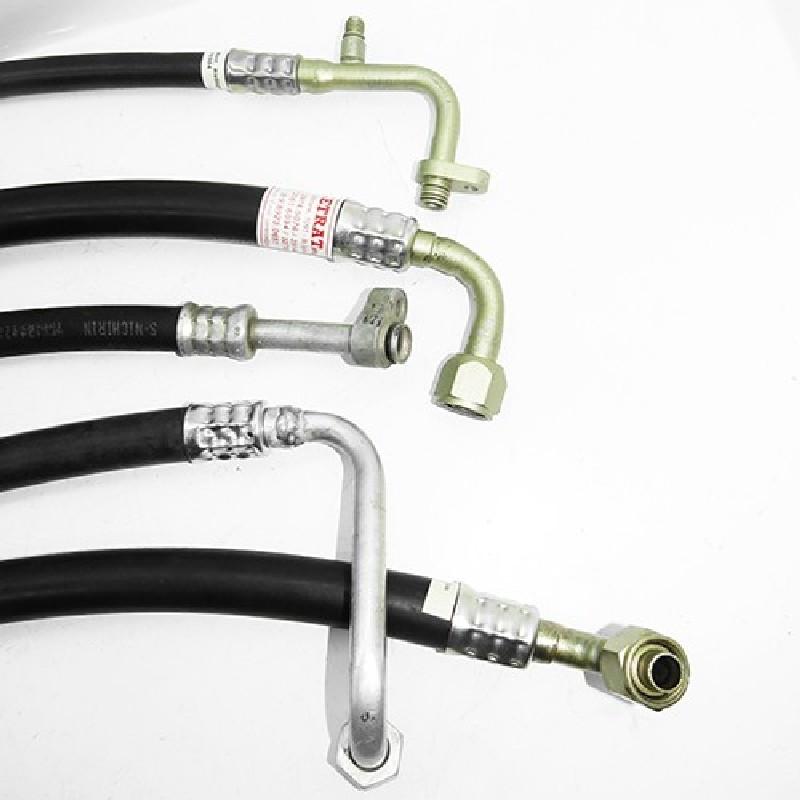
8. R404A Refrigerant and Automotive Air Conditioning Hose Selection
The refrigerant designation in a product name should always be checked against the intended system.
R404A is commonly associated with commercial refrigeration and low-temperature refrigeration applications. It should not automatically be treated as a standard refrigerant for conventional passenger-car air conditioning systems.
This distinction matters when searching for an R404A Auto Air Condition Hose.
The product name alone does not establish that a hose is suitable for every R404A system or that it is approved for automotive mobile air conditioning. Buyers should confirm the actual application, refrigerant and lubricant compatibility, pressure and temperature requirements, and applicable standards with the manufacturer.
For reference, SAE J2064 covers specified coupled automotive refrigerant air-conditioning hose assemblies, including applications involving R-134a, R-152a, and R-1234yf. Its published scope does not list R404A. SAE J3062 separately addresses hose requirements for specified automotive refrigerants.
Therefore, these standards should not be presented as proof of R404A compatibility. A product intended for R404A service needs its own documented technical basis and application approval.
This is especially important for OEM projects and replacement applications, where using the wrong refrigerant hose specification can result in compatibility and performance problems.
9. Selecting a Refrigerant Hose for Reliable Installation
A suitable air conditioning hose must do more than connect two components. It needs to follow the intended routing path, accommodate the movement expected during operation, and maintain its structural integrity under the specified working conditions.
Bending radius, hose length, flexibility, vibration, and external clearance are all connected. Ignoring one of these factors may create installation stress that is not obvious when the system is stationary.
For buyers sourcing automotive air conditioning hoses, the most reliable approach is to define the complete application before confirming the product specification.
This includes identifying the refrigerant, system type, connection dimensions, operating conditions, routing path, and expected movement.
By considering these factors together, buyers can make a more informed selection and reduce the risk of hose deformation, excessive mechanical loading, or premature external wear.