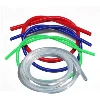
A car water hose is more than a flexible connection between engine cooling components. It must carry coolant through a system exposed to temperature changes, pressure fluctuations, vibration, and limited installation space. Its shape and construction influence how well it fits the vehicle, maintains its passage, and performs throughout repeated heating and cooling cycles.
For automotive manufacturers, replacement-parts suppliers, and distributors, understanding these design factors helps when evaluating a Car Water Hose for a specific vehicle application.
1. Hose Geometry Must Work With the Cooling System Layout
Automotive cooling systems contain multiple components, including the engine, radiator, thermostat housing, and other coolant passages. The connecting hoses must follow the available routing while accommodating movement and vibration.
Straight hoses are suitable for relatively direct connections, but many engine compartments require bends or specially formed sections. A hose that is too rigid or has an unsuitable bend radius may be difficult to install and can experience localized stress.
The design should account for:
Bend radius: The hose must accommodate the required direction change without excessive flattening or kinking.
Overall length: Incorrect length can create tension, interfere with nearby components, or leave the hose poorly positioned.
Connection orientation: The ends must align with the corresponding fittings and coolant ports.
Clearance: The hose should avoid rubbing against belts, brackets, sharp edges, and other nearby parts.
These considerations are particularly important for a custom Car Water Hose. Matching the general diameter is not enough when the original component has a specific formed shape or follows a restricted route.

2. Wall Construction Influences Pressure and Shape Retention
The hose wall must withstand the operating conditions of the cooling system while remaining flexible enough for installation. Its performance depends on factors such as material formulation, wall thickness, reinforcement where applicable, and manufacturing consistency.
A wall that is unsuitable for the application may deform under operating conditions or become less reliable after repeated thermal cycling. However, simply increasing wall thickness is not always the best solution. Excessive stiffness can make routing more difficult and increase the force applied to connecting points.
When evaluating a Car Water Hose, buyers should consider the complete construction rather than one specification in isolation. Inner diameter, outer diameter, wall thickness, material properties, and any reinforcement should be assessed against the intended vehicle requirements.
Dimensional consistency is equally important in production. If hose dimensions vary between batches, installation fit and connection quality may become less predictable. For distributors handling repeat orders, consistent specifications help simplify inventory management and replacement-part matching.
3. Material Compatibility Matters Beyond Temperature Resistance
A car water hose operates in an environment where heat is only one of several considerations. The material must also be compatible with the specified coolant and suitable for repeated exposure to the system's operating conditions.
Coolant formulations vary, so material selection should be based on the actual fluid specification and the hose manufacturer's compatibility data. A hose that tolerates high temperatures does not automatically offer the required resistance to every coolant formulation.
Buyers should also distinguish between hoses intended for different locations within the cooling system. A radiator hose, an engine coolant hose, and a hose used in another fluid circuit may have different design requirements, even when their dimensions appear similar.
For example, a Car Water Hose Replacement should be selected according to the original application and the relevant service specifications, not simply because another hose has a similar shape.
When comparing products, useful checks include:
The specified operating temperature range
Compatibility with the intended coolant
Pressure requirements for the application
Resistance to aging under expected service conditions
Suitability for the required installation geometry
These checks help prevent the common mistake of treating all automotive water hoses as interchangeable.
4. Connection Areas Deserve Particular Attention
The ends of a hose are critical because they connect the flexible section to rigid components. Incorrect dimensions, poor alignment, or unsuitable clamp placement can affect sealing and increase local stress.
A properly specified Car Water Hose should fit the intended connection without excessive stretching or compression. Clamps must be compatible with the connection design and installed according to the vehicle or component manufacturer's instructions.
During inspection, look for cracks, swelling, hardening, abrasion, and deformation around the ends. These signs may indicate material aging, an unsuitable operating environment, or installation-related stress.
For original-equipment and aftermarket supply, accurate end dimensions and consistent manufacturing are especially important when a hose has multiple connection points or a complex formed profile.
5. Evaluate the Complete Specification, Not a Single Feature
When sourcing Car Water Hoses for production or distribution, the most useful approach is to evaluate the product as a complete component.
Start by confirming the vehicle application and original part reference. Then check the hose's dimensions, geometry, material requirements, pressure and temperature specifications, and connection details. If the application is custom, drawings, reference samples, and clear dimensional requirements can help reduce misunderstandings before production.
It is also worth reviewing the surrounding cooling system when a hose has failed repeatedly. Excessive heat, poor routing, contact with adjacent components, or a problem elsewhere in the system may contribute to premature damage. Replacing the hose alone will not necessarily resolve an underlying issue.
A well-designed car water hose balances flexibility, dimensional accuracy, material compatibility, and reliable connections. For buyers, understanding this balance provides a stronger basis for product evaluation than relying on appearance or a single headline specification.