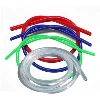
For applications involving food, beverages, or other products that come into contact with the hose, choosing the right tubing requires more than simply looking for a "food grade" label.
A Food Grade Extruded Silicone Hose is commonly used where the hose may come into direct contact with the conveyed product. However, the suitability of a hose depends on the complete operating environment, including the material, transported medium, temperature, cleaning process, dimensions, and installation conditions.
Food Grade Should Match the Intended Application
The inner surface of the hose is the part that directly contacts the transported material. Its material and formulation therefore need to be appropriate for the intended food-contact application.
Different applications and markets can have different requirements. A hose suitable for one food or beverage application should not automatically be assumed to meet every food-contact requirement.
Before purchasing FDA Food Grade Silicone Hoses, buyers should clarify the intended application and confirm the applicable compliance requirements with the supplier.
Useful information includes:
Type of food or beverage being conveyed
Operating temperature
Cleaning and sanitizing conditions
Expected contact time
Applicable regulatory requirements
Required hose dimensions
Providing this information at the beginning can help avoid selecting a material based only on a general product description.
The Cleaning Process Matters
The actual service environment of a food-grade hose is not limited to the time when food or beverage is flowing through it.
Many systems require regular cleaning or sanitizing. During this process, the hose may experience temperatures, cleaning agents, pressure, or repeated thermal cycles that are different from normal operating conditions.
For example, a hose may operate at a moderate temperature during production but be exposed to a higher temperature during cleaning.
These two conditions should therefore be considered separately.
When specifying a Food Grade Extruded Silicone Hose, it is useful to provide both the normal operating conditions and the cleaning procedure. This gives the manufacturer a clearer understanding of the hose's complete working environment.
The Inner Surface Deserves Attention
For a hose used in food-contact applications, the condition of the inner surface is particularly important.
The internal surface should remain suitable for the intended application throughout normal use. Rough handling, unsuitable cleaning procedures, excessive bending, or other mechanical damage can affect the hose even when the original material selection was appropriate.
During routine maintenance, inspect the inside and outside of the hose where practical.
Look for changes such as:
Cracks or cuts
Unusual surface damage
Permanent deformation
Swelling or other visible changes
Damage around connection points
If significant deterioration is found, the hose should be evaluated and replaced when necessary rather than continuing to use it simply because it has not reached a predetermined service period.

Do Not Choose Only by Inside Diameter
Inside diameter is one of the first dimensions buyers usually specify, but it is not enough to define an extruded silicone hose.
Wall thickness, outside diameter, length, flexibility, and connection method can all affect the installation.
A hose with the correct inside diameter may still create problems if the outside diameter does not match the fitting or clamp, or if the wall thickness is unsuitable for the required installation.
For custom orders, it is therefore better to provide a complete dimensional specification rather than only one diameter.
Installation Can Affect Service Performance
Correct material selection does not compensate for poor installation.
The hose should not be forced into a bend tighter than its intended bending capability. Excessive stretching, twisting, or compression can place unnecessary stress on the hose and its connections.
Connection ends should also be kept clean before assembly. Clamps and fittings should match the hose dimensions and should be installed with appropriate pressure.
A clean and correctly installed connection helps reduce the risk of leakage and unnecessary mechanical stress.
When Should a Food Grade Silicone Hose Be Replaced?
There is no single replacement interval that applies to every application.
Service life depends on the material, temperature, cleaning frequency, transported medium, pressure, installation conditions, and other factors.
Instead of replacing a hose based only on time, regular inspection can provide useful information about its condition.
If the hose shows visible damage, permanent deformation, deterioration, or changes that may affect its intended function, replacement should be considered.
For B2B applications, Haidu provides customized Food Grade Extruded Silicone Hose solutions with different diameters, wall thicknesses, lengths, and construction options according to specific application and project requirements.
For applications requiring food-contact compliance, the intended medium, operating conditions, cleaning process, and applicable requirements should be confirmed before production.